Built a club event and race app that has handled thousands of signups
Responsibilities:
- Technical Leadership
- React
- TypeScript
- Hono
- Airtable
- SQLite
- Domain Modeling
- Access Control
- Testing
- Stakeholder Management
Outcomes:
A production app that has handled 4,362 signups across 622 events and race-day logistics for 12 regattas, built with three other contributors across 77 merged pull requests.
Case study
From a shared spreadsheet to a production system#
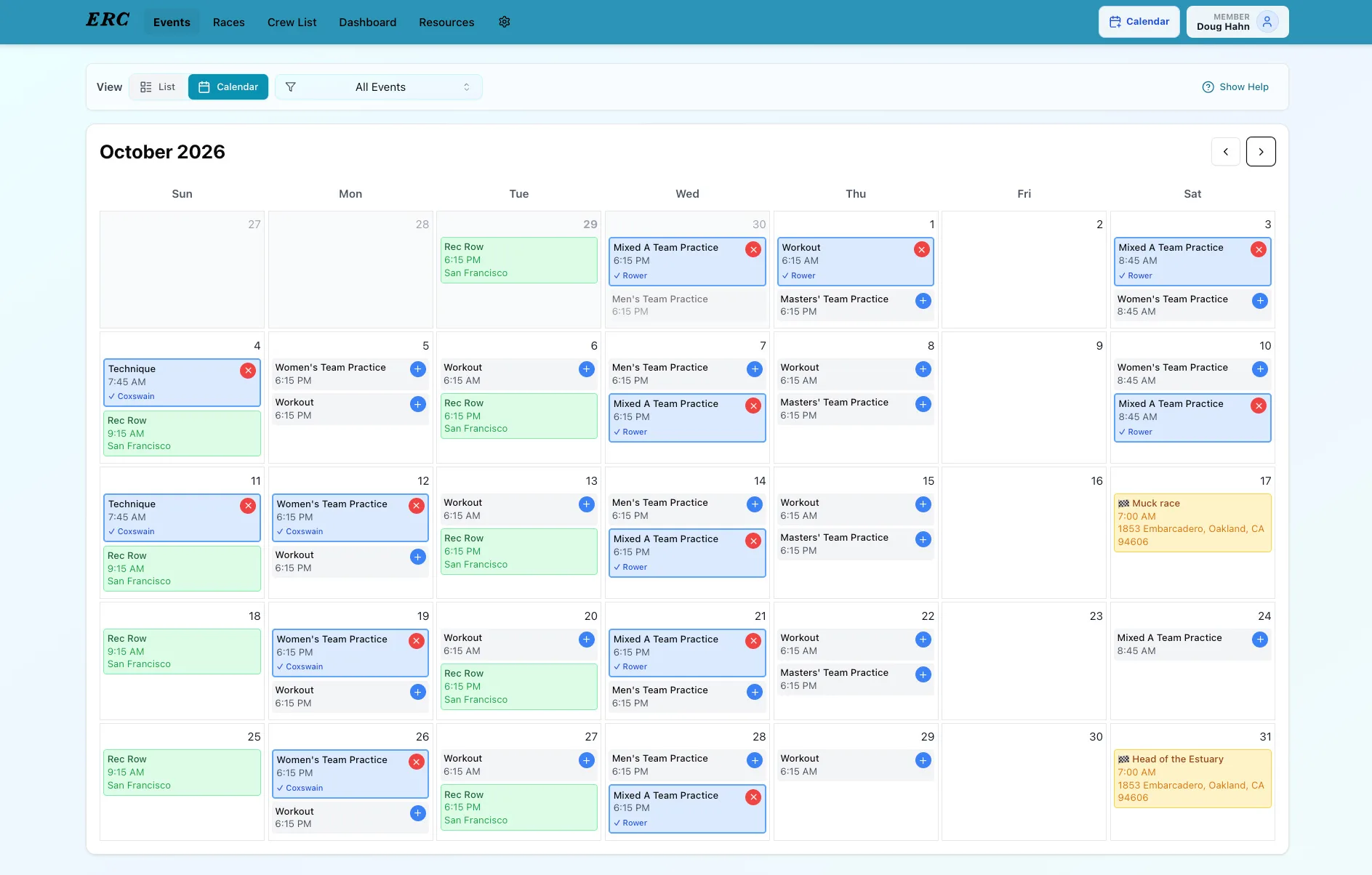
The Embarcadero Rowing Club coordinated practices, crews, and regattas in a shared Google Sheet. As technical lead, I led its replacement: ERC Rows, an event and race management system that's been in production since November 2024.
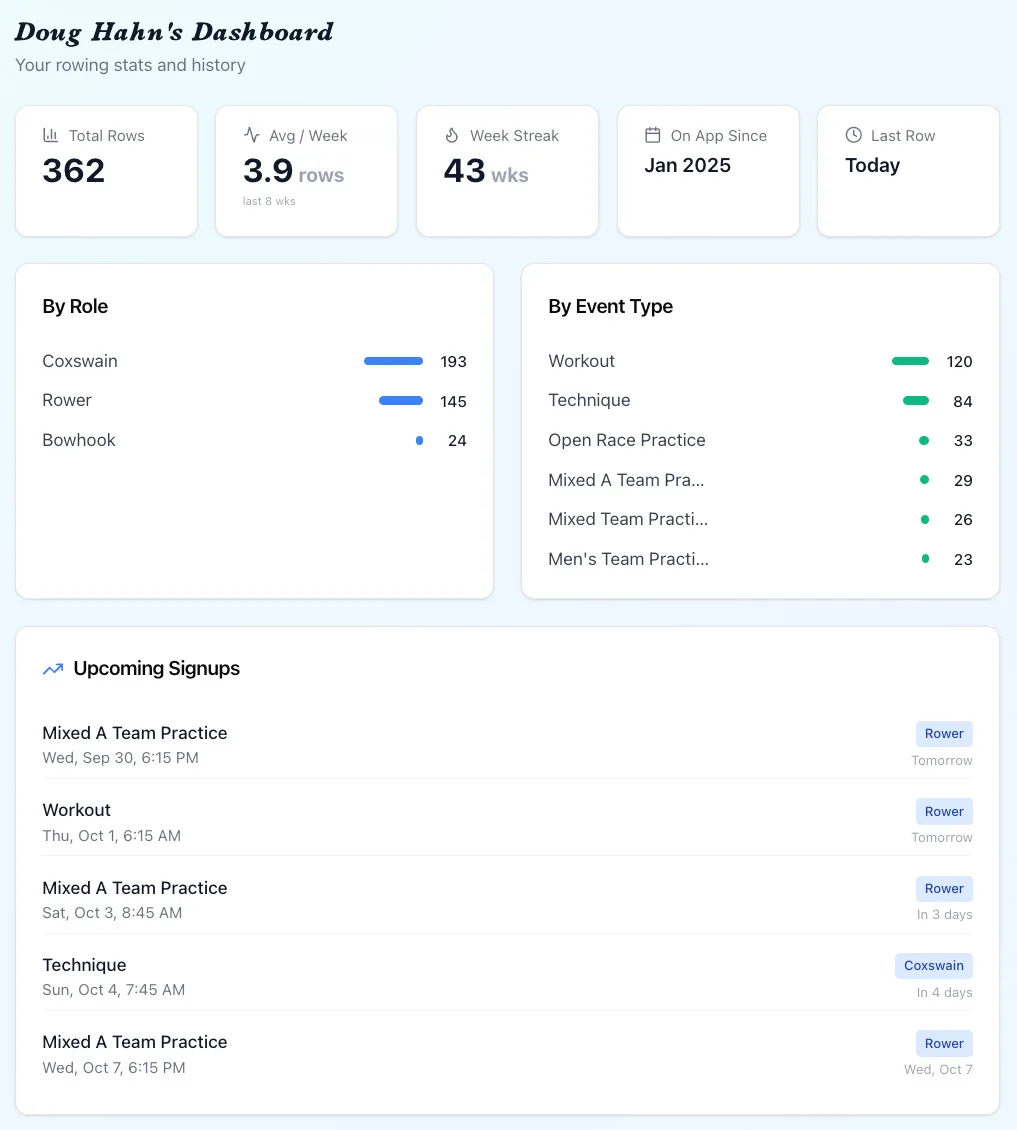
- 4,362 signups across 622 practice events.
- 98 members, 65 of them active; 82 have signed up at least once.
- Race-day logistics for 12 regattas, including 39 division and boat entries with seat assignments.
- About 38,000 lines of TypeScript, with 39 test files spanning unit, integration, and end-to-end tests at multiple access levels.
Keeping the club in control of its data#
The defining decision wasn't a framework choice — it was keeping the club in control of its own data. Production runs on Airtable, so non-technical board members can still open a table and fix a record the way they always have, with no deploy and no engineer. I put that behind a database service interface with a second SQLite adapter, so the app isn't coupled to the vendor and contributors get a local database with no credentials. Stakeholder autonomy and engineering independence, without trading one for the other.
Letting the domain drive the model#
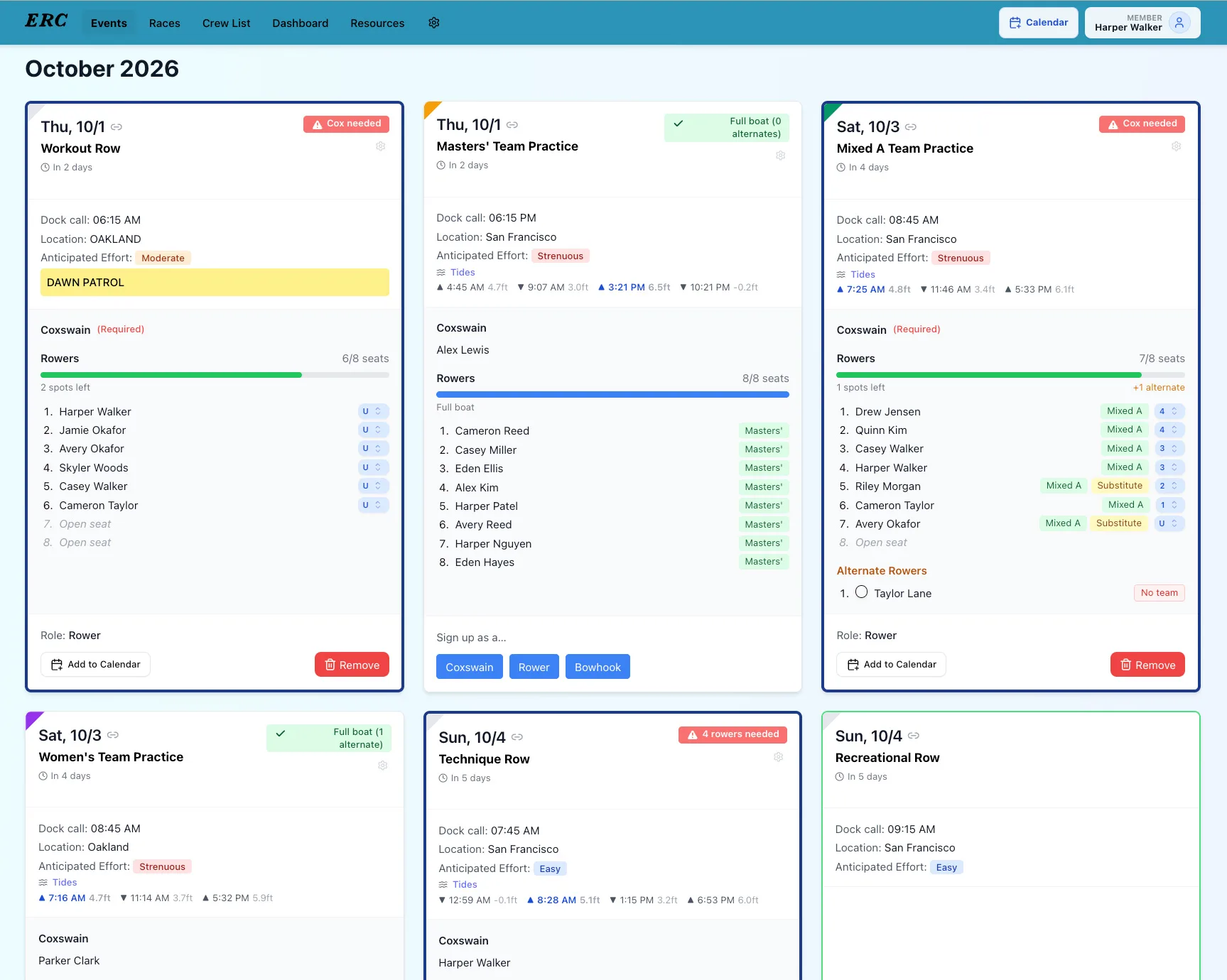
A whaleboat seats eight rowers in port and starboard pairs, plus a coxswain and a bowhook, so seat assignment is modeled that way instead of as a generic roster. Members sign up for the role they can actually row; a full boat takes alternates, who get promoted when a seat opens; and the calendar warns about tide windows and Giants home-game parking. Members sign in with a magic link or a code. Access follows how the club is actually governed — member, event manager, and admin — and is enforced in tiers at the API, not just hidden in the interface.
From solo build to small team#
I grew the project from a solo build into a small team, merging 77 pull requests with three other contributors. That meant writing the conventions down — adapter parity rules, access tiers, preferred patterns — so code review could be about substance rather than style, and building test coverage at the access boundaries where an app like this is most likely to leak data. Live-data migrations run through scripts that dry-run by default and require an explicit commit flag, because the production database is a club that shows up at a dock on Saturday morning.
The club's public website, ercrowing.org, is a separate project I also designed and built.