Launched a national spirits brand, from business plan to 8 million media impressions
Responsibilities:
- Business Planning
- Research
- Branding
- Speechwriting
- Press Releases
- Executive Communications
- Media Relations
- Content Strategy
- User Research
- Facilitation
- Presentation to Executives
- IA
- UX
- SEO
- SEM
- Vendor Procurement
Outcomes:
A business plan that won executive approval, brand guidelines used for five years, a launch release picked up by 61 media outlets for an estimated 8 million earned media impressions, and a content strategy and re-branded website that hit KPI targets for social engagement, search conversions, bounce rate, session duration, and form conversions.
Case study
Introducing a $100MM distillery#
Bently Heritage is a national estate distillery with a $100M buildout. I helped build it from the ground up: first the business plan, then the brand guidelines, then the speeches and press releases that announced it, and finally the content strategy behind its re-branded website.
The business plan#
I was instrumental in researching, evaluating, and formulating a comprehensive business plan for the Bently Heritage brand. We worked with a marketing firm to bolster research and gain access to reports, while also conducting our own discovery in tandem with industry subject matter experts.
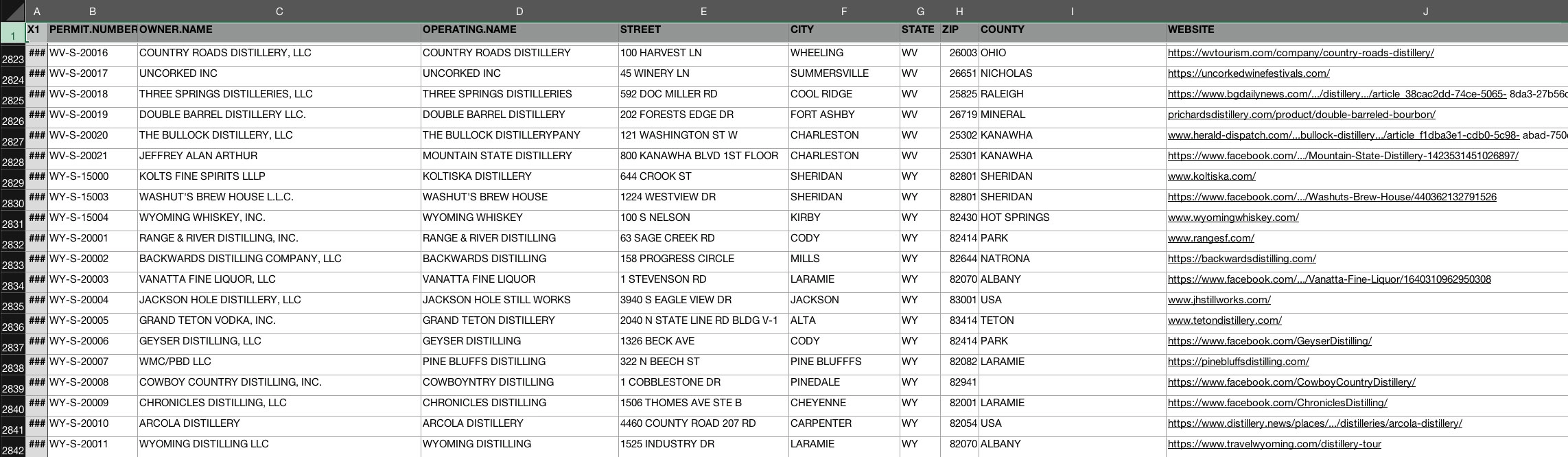
Researching larger-sized competitors was mission-critical, and I was entrusted to research this. We needed to understand the estate distilling landscape: who owns their own farms within the market segment, and can produce sizable amounts of spirits? My research produced info on almost 3,000 distilleries nationwide and gave our team an invaluable understanding of competitors. I distilled the data into a small informational report for the executive team.
The plan encapsulated strategic direction, market analysis, operational structure, a marketing plan, and financial projections, and it was the pivotal tool for executive team approval. I assisted with the SWOT analysis and facilitated the meetings where we established a cohesive brand identity. The final guidebook was produced in close collaboration with the COO and marketing director, typeset by the designer, and used through the distillery’s lifecycle.
The brand guidelines#
In cooperation with senior leadership, design, and marketing teams, I was instrumental in creating the brand guidelines for Bently Heritage. We met with stakeholders to generate business concepts based on word banks, personas, and positioning, and the final guide was approved after careful consumer research, competitive analysis, and iterative refinement based on team feedback.
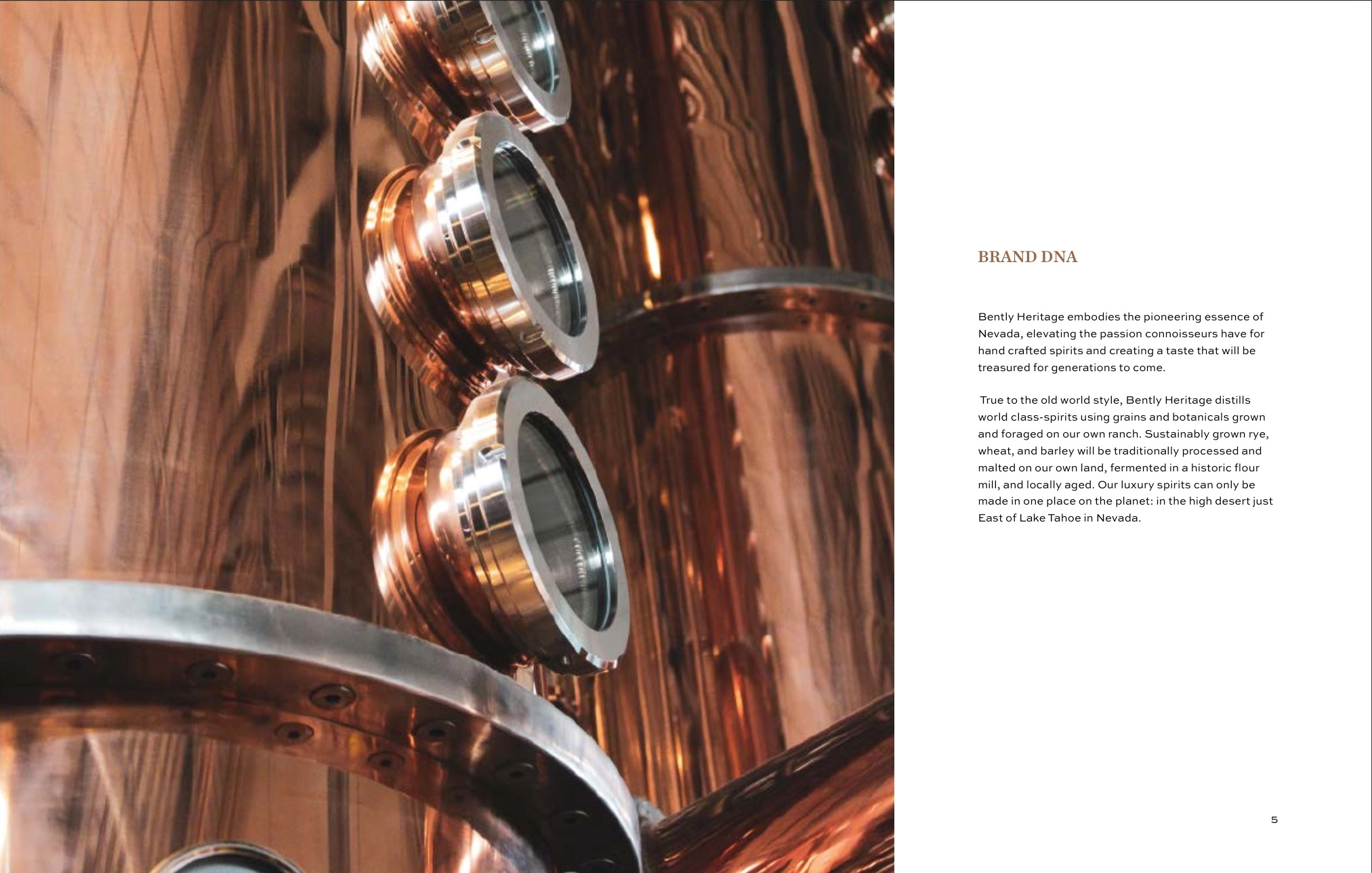
The book covered the brand’s history, DNA, copywriting style, communication pillars, logo and its usage, typography, color palette, photography style, and product showcase. Over the next five years it was the resource for all brand-related decision-making, and it helped the team succeed on projects from a virtual tour to product photography and art direction.
Launch speeches and press releases#
In close collaboration with the COO, marketing director, art director, external PR agencies, and construction firms, I played a central role in crafting executive speeches, designing key talking points for press releases, and shaping media narratives for the unveiling of the project.
By placing a special emphasis on the preservation of historic buildings, we generated positive media engagement and public sentiment, positioning the company as an institution that valued its historical roots while also being a catalyst for local economic growth.
Speechwriting#
This excerpt is from the speech I wrote for the CEO to deliver at the distillery’s groundbreaking ceremony. The goal was to get stakeholders on the client’s side.
What I want is a product that this community loves; this product is about you. You should be able to buy it without breaking the bank. We will be a high quality product, but still something you enjoy on your porch with the people you care about.
If Minden doesn’t love what we’re creating, I’ll toss it out and make something better. And once we’ve refined our product with pride, I want to remind the world that great things start in Minden.
Press releases#
My strategy is always to make the journalist’s job easier, using industry-standard structure and style and keeping releases around 350 words.
The release announcing the distillery was picked up by 61 media outlets, representing an estimated 8 million earned media impressions with an advertising equivalent of about $80K. It was followed by three media inquiries from notable publications. Here is how it opened:
Distillery to be one of first in state under new law#
Christopher Bently, a local entrepreneur and businessman, announced that he is converting the Minden Flour Milling Company building, a National Registered Historic Place, into a craft distillery named Nevada Heritage.
The new distillery will be one of the first operating in the state since Assembly Bill 153 was passed earlier this year, which allows local distilleries to operate.
The content strategy#
Leading a cross-functional team, I acquired buy-in and helped leaders articulate their needs. We created a data-driven content strategy for Bently Heritage that focused on finding and serving user intent.
Quantitative and qualitative audits#
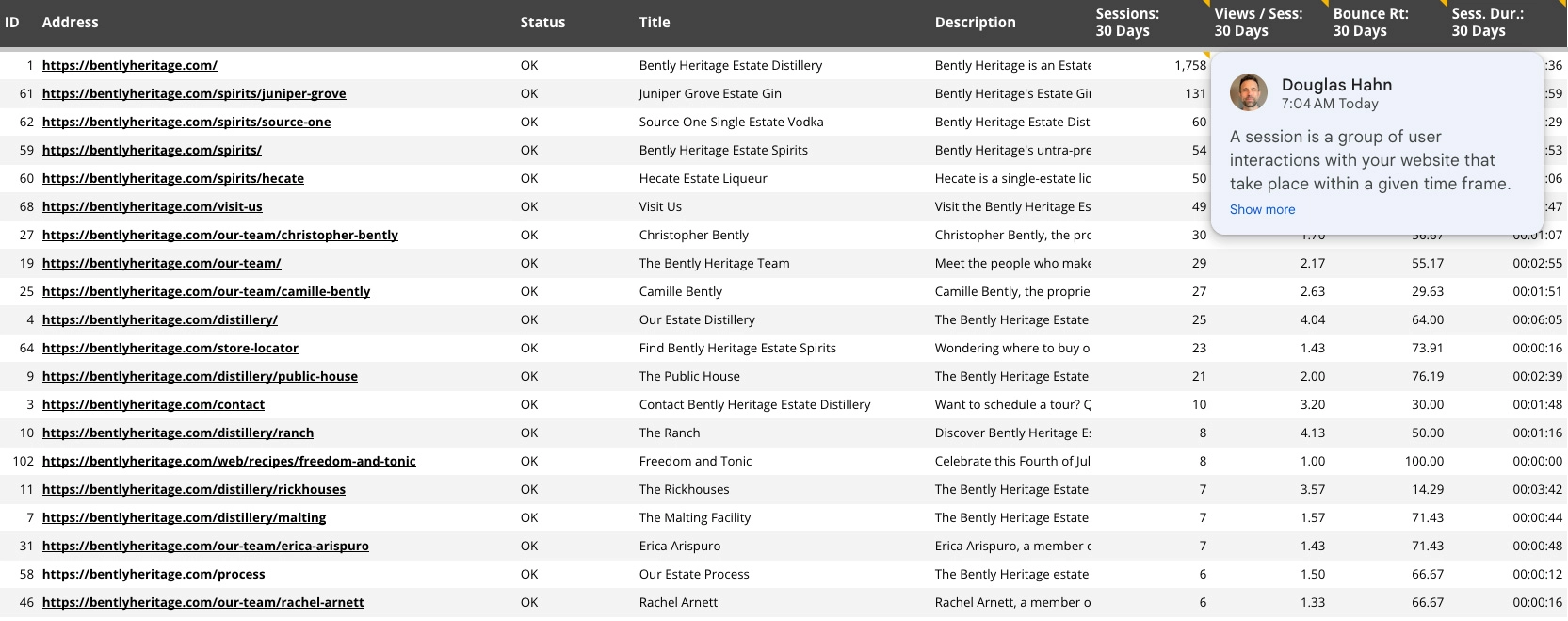
I conducted quantitative audits using automated SEO tools like Screaming Frog and paired them with analytics to identify areas for improvement. To help the leadership team make informed decisions, I provided training and context for key analytics terms such as sessions, views per session, bounce rate, and duration. I presented the audit with games, such as having stakeholders guess how many pages the site had (as is typical, it had many more than anyone thought). The audit also surfaced mechanical issues, such as old pages to remove and broken redirects, which showed the team results early.
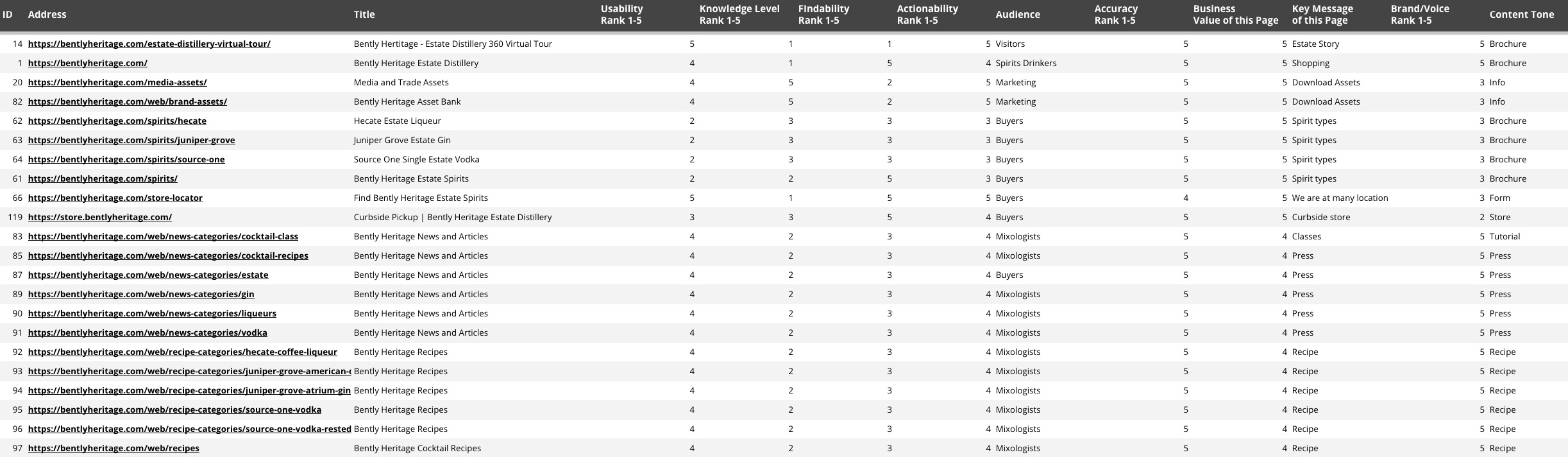
Domain experts then audited the pages they cared most about, scoring them on usability, knowledge level, findability, actionability, target audience, business value, key message, brand appropriateness, and tone. I synthesized their responses to find which areas of the site needed updating first.
User testing#
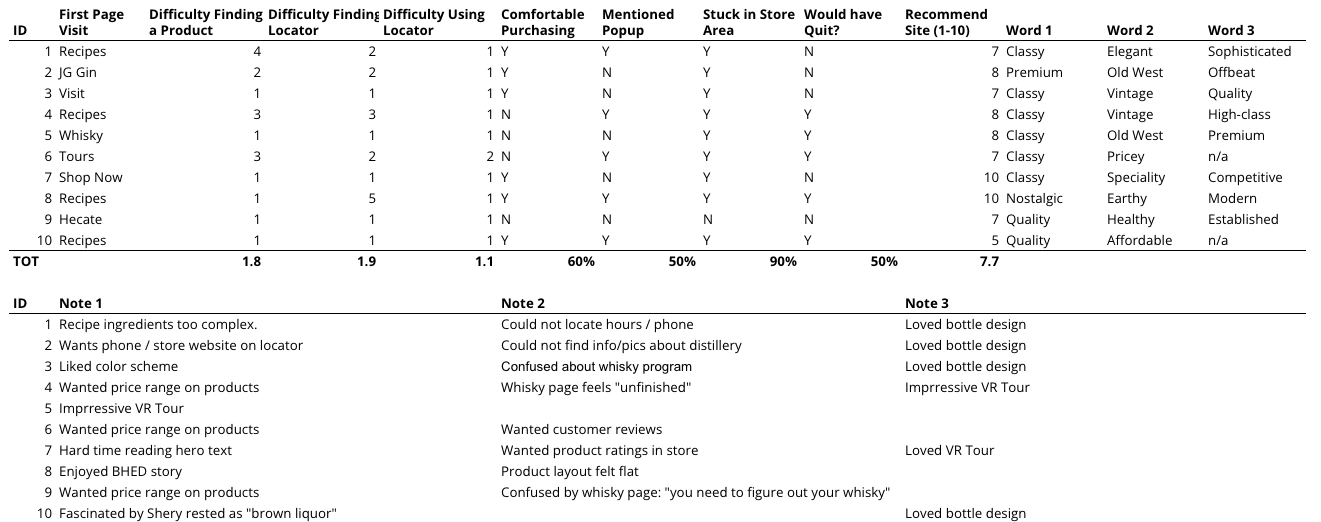
I established user testing with a third-party agency to build an evidence-based understanding of how the brand was viewed. Testing uncovered UX issues like hard-to-find contact forms, and a significant flaw in the online shopping experience that trapped users in a section of the site and was leading to abandoned carts. Fixing it was a simple task that led to improved sales.
Keyword research#
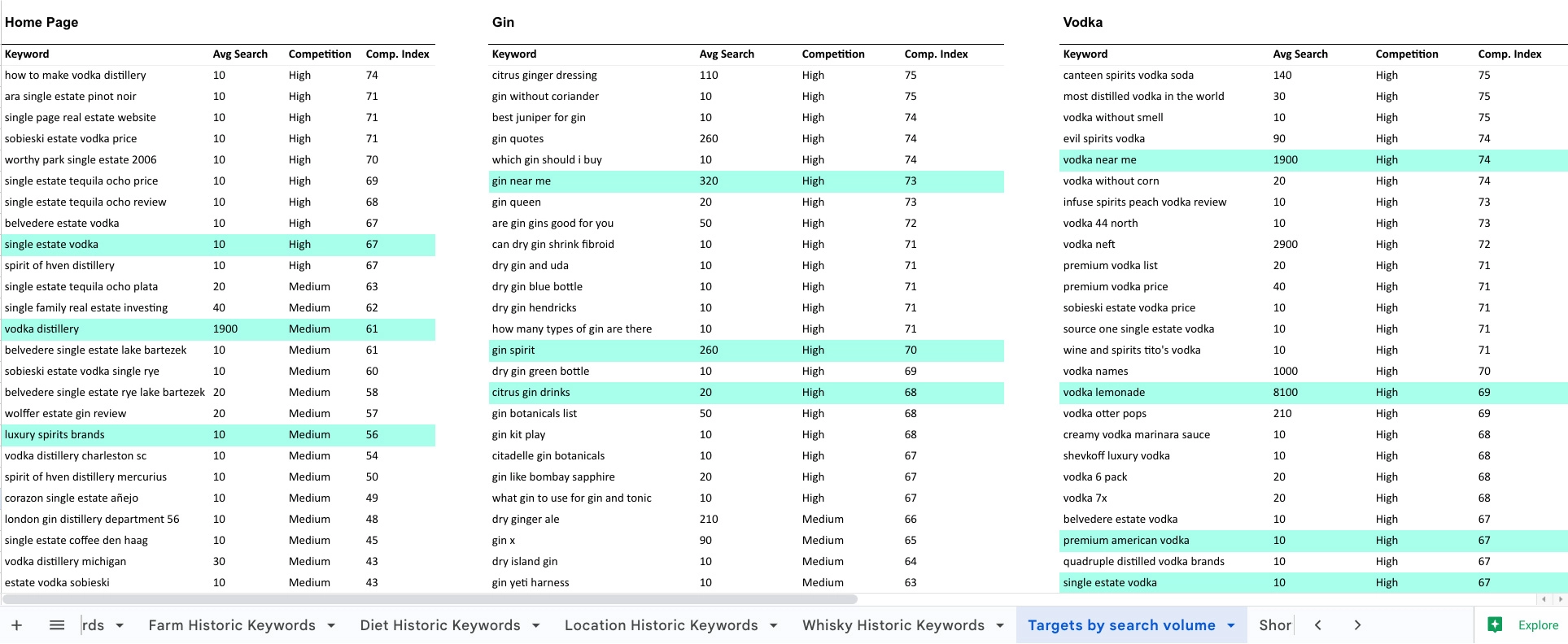
To learn more about user intent, I led the team in extensive keyword research on long-tail keywords, segmented by theme. Within each theme we analyzed:
- Search competition and index
- Top-of-page bid high and low ranges
- Searches by month
What it produced#
Our combined efforts produced a business plan that won executive approval, a launch that earned an estimated 8 million media impressions, a product road map, user testing protocols, an engagement plan, a refreshed marketing strategy, and a re-branded website that achieved our KPI targets: social media engagement, search conversions, lower bounce rate, longer session durations, and web form conversions.